
A black hole in our economy
Illegal tobacco is any tobacco that's made, imported, or sold without paying UK tax. Illegal tobacco steals £1.7 billion from the UK taxpayer every single year. That's money which is lining the pockets of organised criminals that could be reinvested into communities, used to regenerate high streets, or to ease the pressure on already-stretched local resources.
This isn't a marginal issue. It's a serious economic problem impacting communities across the country.
The impact on your local constituency
The illegal trade undercuts honest shopkeepers in your area, forcing them to compete with criminals who sell tobacco products at prices that no legal business can match. Many small retailers are being pushed out, damaging high streets and the local economy.
£1.7 BILLION
in tax revenue lost annually
Leading MP says UK authorities don't have control of the problem
Illegal Cigarettes seized in 2024
Illegal cigarettes sold in 2024
“In reality, [HMRC] have not seized that many in comparison to the number of illicit cigarettes on the market . . . It is 4.5 million as opposed to 1.3 billion. That is not, “We are not going to solve it overnight”. It is, “We do not really have a grip on it”.”
Mr Joshua Reynolds, Liberal Democrat MP for Maidenhead
Q366, House of Commons, Business and Trade Committee Oral evidence: Small business strategy, HC 1057 Tuesday 25 November 2025. Full transcript available here.
People are losing faith in government action
of those surveyed say there is not enough enforcement to stop illegal tobacco
of those surveyed believe increasing taxes will increase demand for illegal tobacco
of those surveyed say they are worried about the impact illegal tobacco has on their area
This data is based on an online survey that was conducted for JTI UK by an independent British Polling Council accredited research agency between January 7 and January 29 2026, involving a sample of 15,228 UK adults aged 19 and over including 5,444 smokers. To ensure the findings are representative of the UK general population, the data was weighted by age, gender and region.
And tougher enforcement is needed
“Trading standards has lost about 40% of its people since about 2011-12 . . . Investing in trading standards, although it would be very welcome and would assist, will only assist in tackling this problem if it is mirrored with resources being made available to the police, HMRC, the Gangmasters and Labour Abuse Authority and immigration. It is that partnership that enables you to tackle these supply chains.”
Wendy Martin, Director, National Trading Standards,
Q343, House of Commons, Business and Trade Committee Oral evidence: Small business strategy, HC 1057 Tuesday 25 November 2025. Full transcript available here.
THE RULES ARE CHANGING IN 2027
From 1 January 2027, new age-of-sale restrictions for tobacco come into force.
The Government’s decision to prohibit the sale of tobacco to people born on or after 1 January 2009 is likely to increase the demand for illicit tobacco and hand even more of the UK tobacco market to serious organised criminal groups who will use the profits to fund wider criminal activities such as terrorism, the distribution of narcotics and people smuggling. This will make getting the enforcement framework right even more important.
Illegal tobacco is any tobacco that’s made, imported, or sold without paying UK tax. It includes smuggled packs, counterfeits, and sales from unregulated sources — like markets, homes, or under-the-counter in some shops.
It's cheap, widely available, and dangerous.
Explore how illegal tobacco impacts:
The public want action.
This is an opportunity to shut illegal tobacco down.
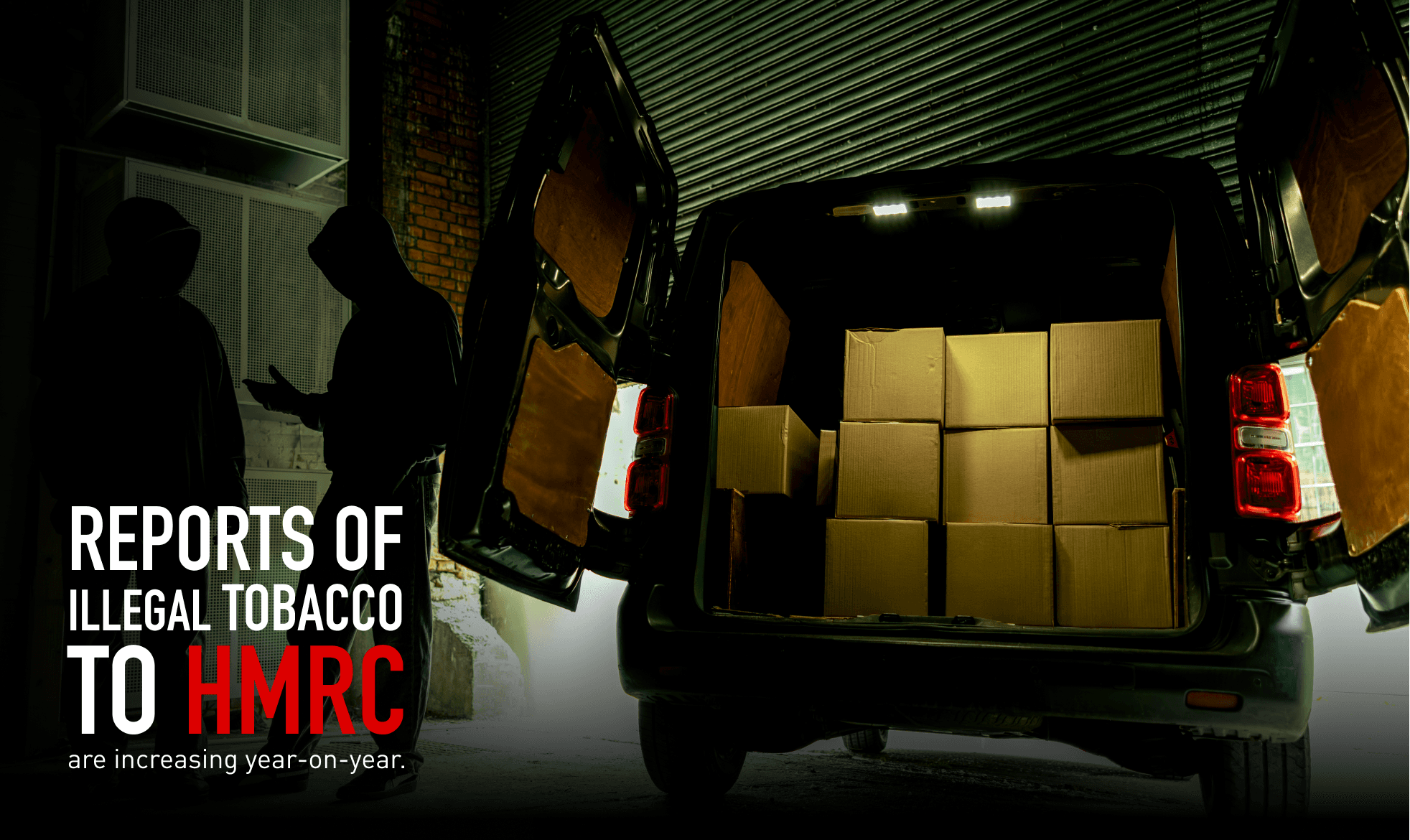
Reports of illegal tobacco to HMRC are increasing year-on-year.
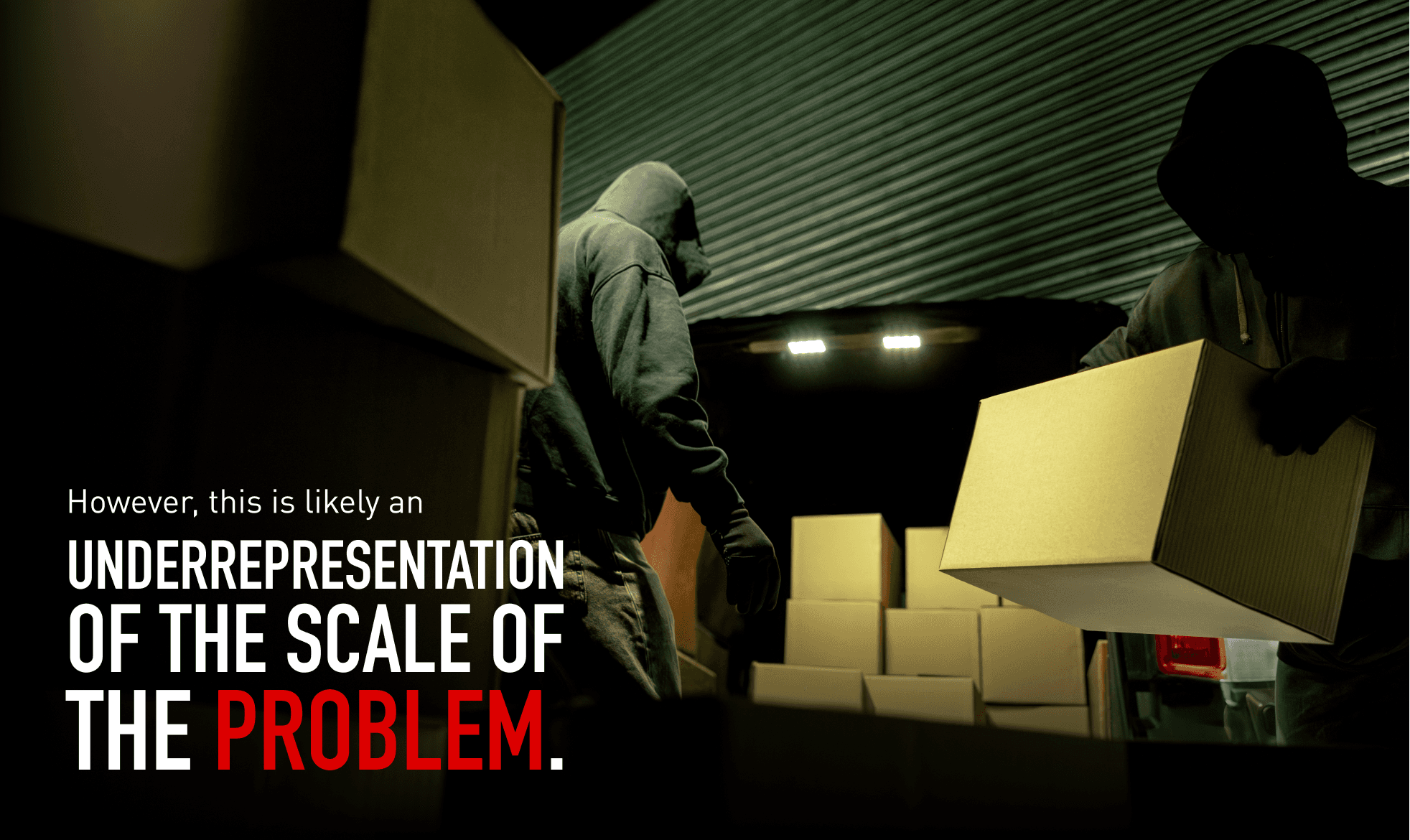
However, this is likely an underrepresentation of the scale of the problem.
Our research found that 62% of people surveyed nationally are worried about potential repercussions if they report illegal tobacco activities.
UK Parliament. (2025, May 21). Written question UIN 51940: HMRC Fraud Reporting Gateway for alcoholic drinks and illegal tobacco. https://questions-statements.parliament.uk/written-questions/detail/2025-05-13/51940
We're calling on the Government to treat illegal tobacco as a serious economic and social issue.
What needs to change:
01
National licensing scheme
- We are calling for a national, whole supply chain licensing scheme covering all tobacco and nicotine products to be introduced as a matter of urgency. A single national regime would provide consistent standards across the UK, support legitimate retailers and make it more difficult for organised crime groups to exploit gaps between local enforcement regimes.
- The proposed retailer licensing scheme for tobacco and nicotine should be extended to the whole supply chain, as is the case for alcohol.
02
Credible enforcement
- A licensing scheme must be backed by robust enforcement powers if it is to deliver its objectives. Licensing and enforcement are two sides of the same coin; one will not succeed without the other.
- Penalties of up to £10,000 should apply to businesses selling illicit tobacco or nicotine products (as is the case for alcohol). Meaningful sanctions are essential to create a credible deterrent and make it significantly harder for criminals to operate openly on UK high streets.
- Closure Notices should be used more consistently. Whilst the reported extension of maximum closure periods to 12 months is welcome, consideration should be given to greater alignment across the UK, where stronger banning orders of up to 24 months are already available in Scotland. In addition, penalties of up to £10,000 (depending on level of repeat offence) be attached to Closure Notices, requiring payment before the premises are allowed to reopen.
- Where the same premises are repeatedly linked to illicit tobacco and nicotine sales under different operators, enforcement action should be capable of extending beyond the individual licence holder. Local authorities should have powers to act against leaseholders or landlords where there is evidence that they have knowingly enabled persistent illegal activity.
- Retailers found repeatedly selling illicit tobacco or nicotine products should be subject to licence suspension or revocation. Persistent offenders should not be allowed to continue operating within the legitimate market alongside honest retailers.
- All enforcement agencies should be able to make full use of existing powers under the Proceeds of Crime Act. In addition to the seizure of illicit stock, authorities should consider confiscating criminal profits, vehicles, storage facilities, equipment and associated cash used to facilitate the illegal trade.
03
Sustainable funding
- Revenues generated from licensing penalties and confiscated proceeds should be ringfenced to reinvest into Trading Standards and other local enforcement agencies.
- This would provide a sustainable, self-funding mechanism for enforcement activity, ensuring that those who profit from illegal trade contribute directly to the resources needed to tackle it.
- Funding enforcement in this way would help ensure that a licensing scheme delivers meaningful outcomes, protecting communities, supporting legitimate retailers and disrupting organised criminal networks.
04
Introduce a single, credible methodology for determining the size of illicit tobacco market
- It is not possible to fix a problem that you cannot reliably measure. Currently, nobody can agree how big the black market for illegal tobacco is. A single, credible methodology is required to ensure that the right policy decisions are being taken on enforcement and excise tax.
£1.7bn figure based on HMRC's tax gap estimates for Excise Duty and VAT losses 2024 - 2025. Measuring_tax_gap_online_tables_2026.xlsx (select the table for 2026 and go to table 3.4 See lines 8 and 9 combined for 2024-2025).